

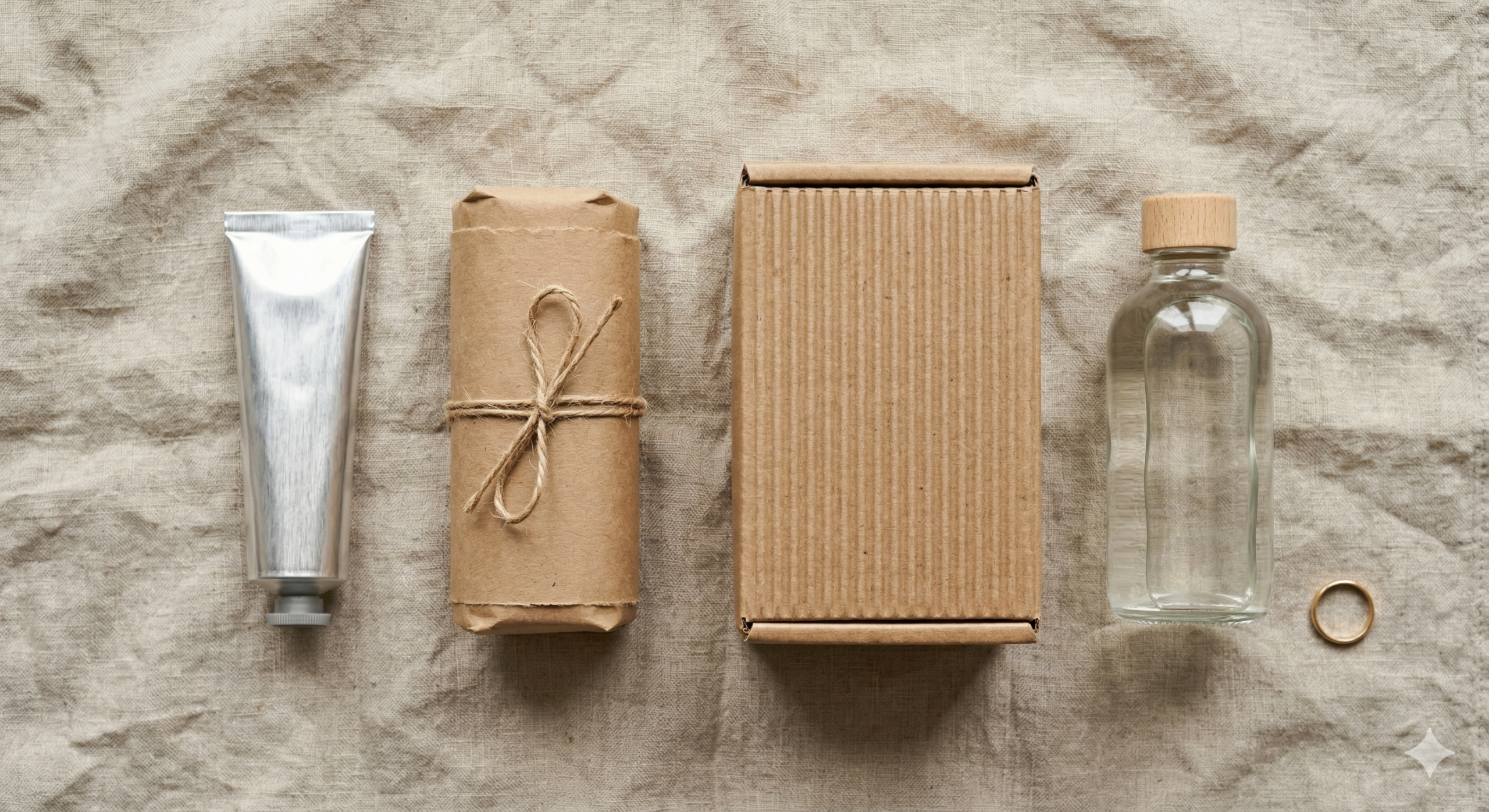


Key Takeaways
- In beauty and wellness, packaging is a brand touchpoint, a social content asset, and an operational variable that affects fulfillment cost and complexity.
- The unboxing experience has become one of the most powerful discovery channels for beauty brands, as influencer content and “shelfie” culture shape first impressions before a product ever reaches a retailer shelf.
- Tactile finishes — embossing, soft-touch coatings, textured labels — add perceived value but also add pack time and handling complexity.
- Sustainability has moved past recyclability into packaging systems: refillable formats, mono-materials, and clear end-of-life instructions that consumers actually act on.
- Packaging decisions made at the brand level create real downstream complexity in fulfillment, and the brands that think through both simultaneously avoid expensive surprises.
For many beauty and wellness brands, the formula is the easy part. You’ve spent months on the ingredients, the texture, the efficacy. Then the packaging samples arrive and something’s off. The box looks dated. The unboxing doesn’t match the price point. The bottle feels like a missed opportunity.
In categories where formula differentiation is narrowing — skincare, lip care, wellness supplements — brands that invest in application as much as formulation are the ones standing out where ingredient stories have plateaued.
The Unboxing Moment Is a Media Event
Social media has replaced search engines as the primary starting point for beauty product discovery — a shift documented in Euromonitor International’s Passport: Digital Shopper 2025 research. Those creators recommend, unbox, demonstrate, and narrate in real time. The box sent to a creator is often the first and most visible brand touchpoint, and it needs to perform visually, emotionally, and sensorially on camera.
That’s not a marketing problem. It’s an operations problem too. If your pack-out quality doesn’t match your brand standards — tissue paper askew, insert cards missing, components rattling — that’s what gets filmed. The brands that understand this treat the fulfillment of PR packages with the same precision as a retail floor set.
Multi-layered packaging that creates anticipation and a sense of ceremony, especially in gift sets, is becoming a standard expectation rather than a premium differentiator. Executing it consistently at scale is where most brands run into trouble. In-house kitting and assembly — done by people who pack beauty products every day, not outsourced to whoever has capacity — is what separates a gift set that photographs well from one packed in a hurry.
Tactile Finishes: The Hidden Operational Cost
High-end brands have always known it: people buy with their hands as much as their eyes.
That first physical interaction — twisting a cap, pressing a pump, feeling the texture of a label — sets a tone about quality and trust. Multi-sensory design is growing across skincare, haircare, and wellness as brands look to communicate premium without raising prices. Specialized techniques like embossing, foil stamping, and textured paper add visual and tactile interest that photos alone can’t replicate.
This matters to founders and ops leaders for a specific reason: tactile finishes and specialty print techniques affect handling time. Embossed cartons and soft-touch coatings are beautiful. They’re also more time-intensive to pack, require more care in transit, and can be damaged by certain void-fill materials. The packaging decision and the fulfillment spec need to be developed together, not sequentially.
Sustainability Has Gotten More Specific
“Eco-friendly packaging” used to mean recycled content and brown kraft boxes. That bar has moved considerably. Consumers are now asking a sharper question: what happens to this after I’m done with it?
The trend has shifted toward packaging systems — refillable formats with replaceable inner cores, mono-material components that are actually recyclable, and recyclability instructions printed directly on pack. Aluminum has emerged as both a premiumization opportunity and a plastic-free alternative, with brands actively sourcing aluminum tubes, tins, and bottles for recent launches.
For operations teams, this introduces real complexity: different SKU counts, different pick logic, and in some cases different storage or hazmat classifications. Fragrance and aerosol products require specific certifications to ship — and the packaging format affects which classification applies. Sustainable packaging that’s operationally unvetted can create more cost than it saves. Recycled corrugate, crumpled recycled paper, and recyclable air pillows remain the baseline that holds up from both a brand and fulfillment standpoint. And no packing peanuts. That one is non-negotiable.
Packaging Decisions to Make Before You Finalize Specs
Whether you’re refreshing an existing line or building from scratch, these are the questions worth working through before finalizing specs:
Follow the brand values, not just the trends. What makes the product appealing to your customer? Bake those values into the container, the insert, the tissue paper. Packaging that feels like an extension of the brand is more defensible than packaging that chases what’s working for someone else.
Think through the full SKU. Primary container, secondary packaging, inserts, tissue, ribbon, seal, inner carton, outer shipper — every element is a cost and a handling step. And validate for transit. Beautiful packaging that arrives damaged is worse than plain packaging that doesn’t. Cosmetics and fragrance have specific shipping requirements that standard box testing doesn’t catch.
Involve your fulfillment operation early. This is where most brands leave value on the table. A packaging spec that looks clean on paper can create real problems at the pick-and-pack stage — a box dimension requiring hand-adjustment on every order, a ribbon closure that triples pack time, an insert card that doesn’t fit without refolding. After 25 years of packing beauty products, we’ve seen all of it. The brands that avoid those surprises bring their fulfillment team into the conversation before designs are finalized, not after purchase orders are placed.
The Operational Reality
Packaging now has to do more work than it used to. Protect the product, perform on camera, communicate the brand, satisfy retail compliance requirements, and ship efficiently — all at once.
For beauty and wellness brands at scale, that tension is real. A custom gift set with hand-tied ribbons and a handwritten note is a beautiful thing to receive. It’s also a meaningful operational decision that affects throughput, labor cost, and capacity planning, especially during peak seasons when order volumes spike and timelines compress. A set that takes four minutes to assemble at 500 units a week looks very different at 5,000 units in the three weeks before the holidays.
The brands that navigate this well aren’t choosing between brand experience and operational efficiency. They’re making packaging decisions with full visibility into what execution requires — and having those conversations early enough to adjust before anything goes to print or production.
Get the packaging right. Then make sure someone who knows how to ship it is in the room when you do.
FAQs
How early should we involve our fulfillment partner in packaging decisions?
Before you finalize specs — ideally before you go to your packaging supplier for quotes. Dimensions, closures, inserts, and void fill all affect pick-and-pack time and cost. Changes made after purchase orders are placed can be expensive. Changes made on paper cost nothing.
Does packaging format affect hazmat shipping classification?
Yes, significantly. A fragrance in a standard glass bottle and the same fragrance in an aerosol can are classified differently, require different certifications, and route through different carrier programs. The volume per unit, aggregate quantity per shipment, and whether the product ships ground or air all factor in. Capacity holds DOT-SP 21015 — one of 31 such permits in the US — which allows us to ship fragrances and aerosols by air where most providers are ground-only. If you’re reformatting or repackaging a hazmat product, loop in your fulfillment team before the new spec is locked.
What’s the real cost of tactile packaging finishes like soft-touch coatings or embossing?
The material cost is usually modest. The operational cost is where brands get surprised. Soft-touch laminates can scuff during packing if the wrong void fill is used. Embossed cartons sometimes require more careful handling to avoid denting. Both can increase per-unit pack time. None of that is a reason to avoid them — it’s a reason to account for it in your fulfillment spec from the start.
What makes a gift set “consistent at scale” versus just consistent in a photoshoot?
Repeatability. A gift set that looks great when your team hand-builds ten samples for a campaign shoot can fall apart at 2,000 units if the assembly isn’t engineered for speed and consistency. That means clear component specs, defined pack sequence, appropriate workstation setup, and quality checkpoints built into the line. In-house assembly with trained staff — not ad hoc labor — is what makes the difference at volume.
Is sustainable packaging always more expensive?
Not necessarily. Recycled corrugate and crumpled recycled paper are often cost-neutral or cheaper than branded tissue and foam inserts. Mono-material structures can simplify sourcing. Where brands run into cost surprises is when they choose sustainable materials that aren’t operationally compatible — packaging that requires more labor to assemble, takes longer to pack, or results in more damage in transit. Sustainability and efficiency aren’t opposed, but they have to be designed together.